What Are Neodymium Magnet Grades?
Neodymium magnets, also known as NdFeB magnets, are the strongest type of permanent magnets available today. They are widely used in applications where high magnetic performance is required, including electric motors, sensors, speakers, automation equipment, and renewable energy systems.
However, not all neodymium magnets provide the same level of performance. Different
grades of neodymium magnets are designed to deliver different levels of magnetic strength, temperature resistance, and overall reliability. Selecting the right grade is essential to ensure the magnet performs properly throughout its service life.
A common misconception is that the strongest magnet grade is always the best choice. In reality, the ideal grade depends on several factors, including the required magnetic force, operating temperature, available space, environmental conditions, and cost considerations.
For example, a compact motor operating at high temperatures may require a
high-temperature neodymium magnet grade such as an SH or UH series, while a general sensor application may work well with a
standard N35 or N42 grade.
At AEMagnets, we understand that magnet selection is not only about choosing a higher magnetic grade. With professional magnet design experience and customized manufacturing capabilities, we help customers select suitable magnet materials and specifications based on their actual application requirements.
Understanding the Meaning of Neodymium Magnet Grade Numbers
Neodymium magnet grades are usually represented by a letter
“N” followed by a number, such as
N35, N42, N45, N52, and so on.
The letter
“N” indicates that the magnet is made from standard neodymium-iron-boron (NdFeB) material, while the number represents its
maximum energy product (BHmax), measured in
Mega Gauss Oersteds (MGOe).
The higher the grade number, the greater the maximum magnetic energy the magnet can produce.
For example:
·
N35 has a maximum energy product of approximately 35 MGOe.
·
N42 provides higher magnetic performance than N35.
·
N52 is among the highest standard neodymium magnet grades available, offering very strong magnetic force in a compact size.
This means an N52 magnet can generally provide stronger magnetic performance than an N35 magnet of the same size. However, choosing between different grades requires more than simply selecting the highest number.
Higher-grade magnets often involve:
· Higher material costs
· Different manufacturing requirements
· Potential limitations in temperature performance
Therefore, engineers usually select a magnet grade based on the complete application requirements rather than magnetic strength alone.
The Difference Between Magnetic Strength and Magnet Grade
Although magnet grade is closely related to magnetic performance, it does not represent every characteristic of a magnet.
A neodymium magnet’s performance depends on several key parameters:
Maximum Energy Product (BHmax)
This value indicates the maximum magnetic energy stored in the magnet. It is the main factor used to classify standard grades such as N35, N42, and N52.
A higher BHmax value means the magnet can generate stronger magnetic force within the same volume.
Remanence (Br)
Remanence refers to the residual magnetic induction remaining after the magnet has been magnetized.
A higher remanence value means the magnet can produce a stronger magnetic field.
Coercivity (Hc)
Coercivity measures the magnet’s resistance to demagnetization.
Magnets used in harsh environments, high temperatures, or strong external magnetic fields often require higher coercivity grades to maintain stable performance.
Operating Temperature
Temperature is another critical factor when selecting a neodymium magnet grade.
Standard grades may lose performance when exposed to elevated temperatures, while high-temperature grades such as SH, UH, EH, and AH are specially developed for demanding environments.
For this reason, the best neodymium magnet grade is not necessarily the one with the highest magnetic strength. It is the grade that provides the right balance of
magnetic performance, temperature stability, reliability, and cost for the specific application.
Neodymium Magnet Grade Classification
Neodymium magnet grades are classified based on two main factors:
magnetic strength and
temperature resistance.
A typical neodymium magnet grade is represented by a combination of numbers and letters, such as
N42, N42H, N45SH, or N52.
The first part indicates the magnet’s
magnetic performance, while the suffix indicates its
temperature resistance and ability to resist demagnetization under heat.
For example:
·
N42 → Standard grade with a maximum energy product of approximately 42 MGOe
·
N42H → N42 magnetic performance with improved high-temperature resistance
·
N45SH → Higher magnetic strength with superior temperature stability
Understanding these classifications helps engineers select the right magnet based on actual working conditions instead of simply choosing the highest magnetic grade.
Standard Neodymium Magnet Grades (N35–N52)
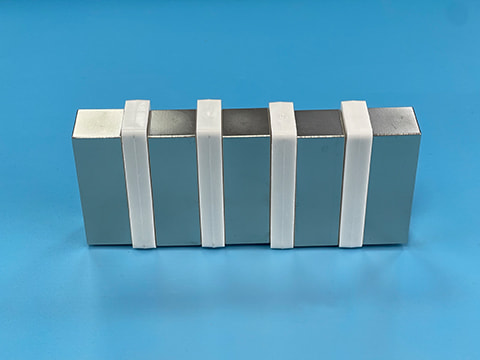
The most common neodymium magnet grades are classified by their maximum energy product (
BHmax), measured in
Mega Gauss Oersteds (MGOe).
A higher grade number generally means the magnet can produce stronger magnetic force within the same volume.
Common standard grades include:
|
Grade |
Approx. Magnetic Strength |
Typical Applications |
|
N35 |
Standard strength |
General industrial applications, magnetic assemblies |
|
N38–N42 |
Medium to high strength |
Motors, sensors, automation equipment |
|
N45–N48 |
High strength |
Compact devices requiring stronger magnetic force |
|
N50–N52 |
Very high strength |
Space-limited and high-performance applications |
N35–N42 Neodymium Magnets: Balanced Performance and Cost
N35 to N42 grades are widely used because they provide a good balance between magnetic performance and cost.
They are suitable for applications where:
· Moderate magnetic force is required
· Size limitations are not extremely strict
· Cost efficiency is important
Typical applications include:
· Speakers
· Magnetic holders
· Sensors
· Small motors
· Industrial magnetic components
N45–N52 Neodymium Magnets: High Magnetic Performance
Higher grades such as N45, N48, N50, and N52 are designed for applications requiring maximum magnetic force in a limited space.
Compared with lower grades, these magnets can provide:
· Higher magnetic flux density
· Greater holding force
· Smaller magnet size for the same performance requirement
They are commonly used in:
· High-efficiency motors
· Robotics
· Precision equipment
· Compact electronic devices
· Advanced magnetic assemblies
However, higher magnetic grades are not always the best choice. In high-temperature environments, a lower-strength grade with better temperature resistance may provide more reliable long-term performance.
High-Temperature Neodymium Magnet Grades (H, SH, UH, EH, AH)
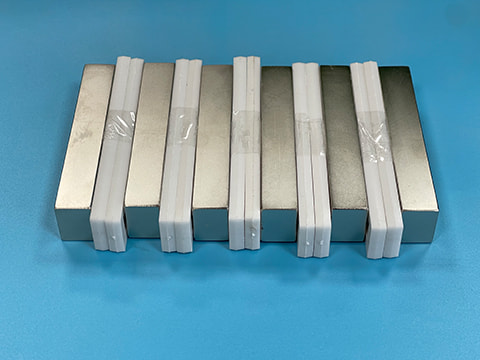
Standard neodymium magnets can typically operate up to around
80°C (176°F). When exposed to higher temperatures, they may experience reduced magnetic performance or permanent demagnetization.
To solve this problem, neodymium magnets are available with temperature-resistant suffixes. These suffixes indicate improved coercivity (
Hcj) and better resistance to demagnetization at elevated temperatures.
The common temperature classifications include:
|
Suffix |
Description |
Typical Hcj |
Typical Maximum Temperature |
|
N |
Standard |
12 kOe |
80°C (176°F) |
|
M |
Medium Temperature |
14 kOe |
100°C (212°F) |
|
H |
High Temperature |
17 kOe |
120°C (248°F) |
|
SH |
Super High Temperature |
20 kOe |
150°C (302°F) |
|
UH |
Ultra High Temperature |
25 kOe |
180°C (356°F) |
|
EH |
Extra High Temperature |
30 kOe |
200°C (392°F) |
|
AH |
Advanced High Temperature |
33 kOe |
230°C (446°F) |
For example:
·
N42 is suitable for normal temperature applications.
·
N42H provides improved temperature resistance for warmer environments.
·
N42SH or N42UH are commonly selected for high-temperature motors and industrial equipment.
How to Choose the Right Neodymium Magnet Grade
Selecting the correct magnet grade requires balancing magnetic performance, temperature requirements, and application conditions.
Consider Operating Temperature
The first step is identifying the maximum working temperature of the application.
A magnet used near its temperature limit may lose performance over time. Choosing an appropriate temperature grade provides better reliability and longer service life.
Consider Magnetic Requirements
Higher grades can provide stronger magnetic force in a smaller size. However, maximum strength is not always necessary.
Engineers should evaluate:
· Required holding force
· Magnetic field strength
· Available installation space
Consider Performance and Cost Balance
Higher-grade and high-temperature magnets usually involve higher material costs.
The optimal choice is often the grade that meets the application requirements while maintaining cost efficiency.
Real-World Applications of Different Neodymium Magnet Grades
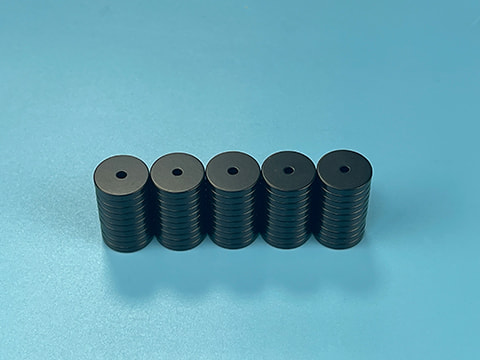
Neodymium magnets are used in a wide range of industries, from scientific equipment and robotics to consumer products and industrial machinery. However, different applications require different combinations of magnetic strength, size, magnetization direction, and temperature resistance.
The following examples show how different neodymium magnet grades are selected based on actual application requirements.
Neodymium Magnets for Scientific and Research Equipment
Application: Neutron Optics Devices
Magnet Grade: N35
Size: 50 × 10 × 20 mm
Magnetization
Direction: Through the 20 mm thickness
Quantity: 120 pcs
Scientific equipment often requires magnets with stable magnetic performance, precise dimensions, and controlled magnetization direction.
For neutron optics applications, the magnet does not necessarily require the highest magnetic grade. Instead, factors such as magnetic consistency, dimensional accuracy, and reliable performance are critical.
An N35 neodymium magnet provides a practical balance between magnetic performance and cost, making it suitable for precision research equipment where controlled magnetic fields are required.
Neodymium Magnets for Magnetic Accessories and Consumer Products
Application: MagSafe-Compatible Magnetic Accessories
Magnet Grade: N42 or higher
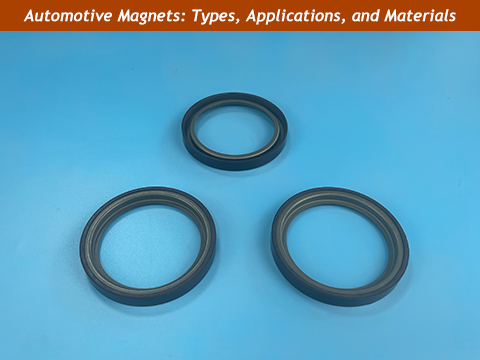
Size: Ø56 mm ring magnet
Application: Rubber-encapsulated MagSafe magnetic ring samples
Magnetic accessories require strong and reliable magnetic attachment while maintaining a safe surface interface with consumer devices.
For MagSafe-style accessories, higher-grade neodymium magnets such as N42 or above are commonly selected because they provide strong magnetic holding force while allowing a compact product design.
In this type of application, magnet grade selection must also consider:
· Magnetic strength
· Ring design
· Encapsulation material
· Surface protection requirements
Neodymium Magnets for R&D and Prototype Development
Application: Product Research and Development
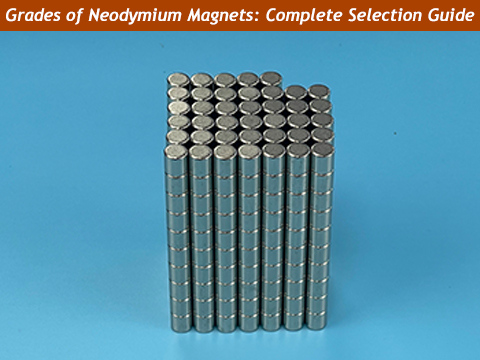
Magnet Grade: N52SH
Size: Ø0.25" × 1" cylinder
Magnetization Direction: Axial
Quantity: 400 pcs
During research and development projects, engineers often require high-performance magnets to evaluate product concepts and validate designs.
N52SH combines:
· Very high magnetic performance
· Improved temperature resistance compared with standard N52
· Reliable performance in demanding environments
This grade is suitable for prototypes where engineers need strong magnetic output while maintaining stability during testing.
Neodymium Magnets for Robotics and Automation
Application: Robotic Systems
Magnet Grade: N52
Size: Ø50 × Ø11 × 60 mm
Magnetization Direction: Axial
Robotics applications often require compact components that deliver maximum magnetic force within limited installation space.
N52 magnets are widely used in robotic systems because their high magnetic energy density allows designers to achieve strong magnetic performance without increasing component size.
Typical considerations for robotic applications include:
· Magnetic force requirements
· Compact design
· Position accuracy
· Long-term reliability
Neodymium Magnets for Generators and Power Equipment
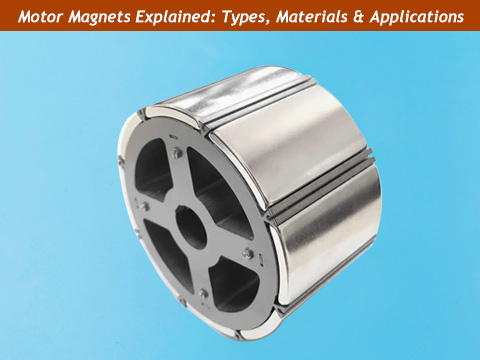
Application: Generator Stators
Magnet Grade: N52
Magnetization Direction: Through specified pole faces
Quantity: 1,680 pcs total
Magnetic components used in generators require strong and stable magnetic fields to improve energy conversion efficiency.
N52 magnets are often selected for generator applications because they provide high magnetic flux density, helping engineers achieve better performance while maintaining a compact design.
For stator applications, important factors include:
· Magnet grade
· Magnetization direction
· Dimensional accuracy
· Consistent magnetic properties
Neodymium Magnets for Packaging and Industrial Products
Application: Magnetic Closure for Cardboard Boxes
Magnet Grade: N52 or N45
Size: 10 mm × 1.0–1.5 mm
Quantity: 500,000 pcs total
Magnetization Direction: Axial
Packaging applications require large quantities of consistent magnets with reliable magnetic performance.
For magnetic box closures, N45 and N52 grades are commonly considered because they provide sufficient holding force while maintaining a small and lightweight design.
In high-volume applications, factors such as:
· Cost control
· Production consistency
· Quality stability
are as important as magnetic performance.
Neodymium Magnets for Conveyor and Industrial Handling Systems
Application: Conveyor Tracks
Magnet Grade: N54
Size: Ø16 × 5 mm
Magnetization Direction: Through 5 mm direction
Quantity: 10,000 pcs
Required Pull Force: Approximately 7.5–8 kg
Industrial conveyor systems often require magnets with strong holding force and reliable operation.
N54, one of the highest standard neodymium magnet grades, is selected when maximum magnetic performance is required within a compact size.
For conveyor applications, the key factors include:
· Pull force requirements
· Magnet dimensions
· Magnetization direction
· Operating environment
Choosing the Right Neodymium Magnet Grade for Your Application
These examples demonstrate that there is no single “best” neodymium magnet grade for every application.
The optimal choice depends on balancing:
· Required magnetic force
· Magnet size limitations
· Magnetization direction
· Operating conditions
· Production volume
· Cost requirements
A lower grade such as N35 may be the ideal choice for precision equipment, while N52 or N54 may be necessary for compact high-force applications.
At
AEMagnets, we work with customers across different industries to provide suitable
neodymium magnet solutions, from standard magnets to customized designs. Our experience in magnet design, manufacturing, and quality control helps customers select the right grade and specifications for their projects.
Frequently Asked Questions About Neodymium Magnet Grades
What are the common grades of neodymium magnets?
Common neodymium magnet grades include
N35, N38, N42, N45, N48, N50, and N52. High-temperature grades include
H, SH, UH, EH, and AH series.
What is the difference between N35, N42, N52 and H, SH, UH, EH neodymium magnet grades?
N35, N42, and N52 indicate the
magnetic strength level of a neodymium magnet, while H, SH, UH, EH, and AH indicate the
temperature resistance level.
These two classifications are usually combined to describe a complete magnet grade.
For example:
·
N35 → Standard magnetic strength grade
·
N52 → Higher magnetic strength grade
·
N42H → N42 magnetic strength with improved temperature resistance
·
N45SH → N45 magnetic strength with higher temperature stability
·
N42UH → N42 magnetic strength designed for higher-temperature applications
Is N35 or N52 stronger?
N52 is stronger than N35. An N52 magnet can generate a higher magnetic force than an N35 magnet of the same size.
However, N35 may still be the better choice when lower cost and sufficient magnetic performance are more important.
What is the difference between N42 and N52 magnets?
The main difference is magnetic strength.
· N42 provides good performance with balanced cost.
· N52 provides higher magnetic force for applications requiring maximum performance in limited space.
Can N52 magnets be used in high-temperature applications?
Standard N52 magnets are mainly designed for normal temperature applications. For high-temperature environments, grades such as
N52H, N48SH, or N42SH may be more suitable.
What is the highest temperature neodymium magnet grade?
High-temperature grades include
UH, EH, and AH, which provide better resistance to demagnetization at elevated temperatures compared with standard grades.
Are high-grade neodymium magnets always better?
No. The best magnet grade depends on the application.
A higher grade may provide stronger magnetic force, but a temperature-resistant grade may be more suitable for high-temperature environments.
Which neodymium magnet grade is best for motors?
Common grades for motors include
N42, N45, N48, N52, and SH grades.
The selection depends on motor design, required efficiency, and operating temperature.
What neodymium magnet grade is commonly used for sensors?
Sensors commonly use grades such as
N35, N42, and N52, depending on the required magnetic field strength and available space.
Can custom neodymium magnets be produced with different grades?
Yes. Custom neodymium magnets can be manufactured with different grades, shapes, sizes, coatings, and magnetization directions according to application requirements.
How do I select the right neodymium magnet grade for my project?
The right grade depends on:
· Required magnetic strength
· Operating temperature
· Magnet size limitations
· Application environment
· Cost requirements
A suitable grade provides the best balance between performance and reliability.
Does magnet grade affect the price of neodymium magnets?
Yes. Higher-performance grades generally require more advanced materials and manufacturing processes, which can increase the cost.
For example, an N52 magnet is usually more expensive than an N35 magnet of the same size. High-temperature grades such as SH and UH grades may also have higher costs due to their improved thermal stability.