Introduction to Automotive Magnets
Automotive magnets are small but very important parts inside modern vehicles. They are used in many key systems such as electric motors, sensors, and control units. Without magnets, many functions in today’s cars—especially electric vehicles—would not work efficiently or accurately.
In traditional fuel cars, magnets were mainly used in simple parts like speakers or basic sensors. But in modern cars, especially electric vehicles (EVs), magnets now play a much bigger role. They help drive the motor, control steering systems, and support many electronic functions inside the vehicle.
Different parts of a car require different types of magnets. For example, powerful
NdFeB magnets are used in EV motors because they provide very strong magnetic force in a small size.
Ferrite (ceramic) magnets are often used in sensors where cost and stability are more important than high strength. For high-temperature areas,
SmCo magnets are used because they can work reliably even under extreme heat.
Automotive magnets must also perform under tough conditions. Cars experience constant vibration, temperature changes, and sometimes corrosive environments. This means the magnets must be stable, durable, and consistent over long periods of use.
As electric vehicles and smart automotive systems continue to grow, the demand for better and more efficient magnets is increasing quickly. Understanding how these magnets work and where they are used helps engineers and buyers choose the right material for each application.
Main Types of Magnets Used in Automotive Applications
Different parts of a vehicle need different types of magnets. The choice depends on factors like magnetic strength, working temperature, cost, and durability. In automotive engineering, four main types of permanent magnets are commonly used.
NdFeB (Neodymium) Magnets for High-Performance Motors
NdFeB magnets are the strongest type of permanent magnets used in automotive systems. They are widely used in
electric vehicle (EV) drive motors because they provide very high magnetic force in a compact size.
This helps EV motors achieve:
· Higher efficiency
· Smaller motor size
· Stronger torque output
However, NdFeB magnets are more sensitive to high temperatures, so they are often used with special coatings or in systems with controlled thermal design.
SmCo (Samarium Cobalt) Magnets for High-Temperature Environments
SmCo magnets are known for their excellent heat resistance and stability. They can work reliably in very high-temperature environments without losing performance.
In automotive systems, they are often used in:
· High-temperature motors
· Sensors in engine compartments
· Aerospace or performance vehicles
Although they are more expensive than other magnet types, their stability makes them suitable for critical applications.
Ferrite (Ceramic) Magnets for Cost-Sensitive Applications
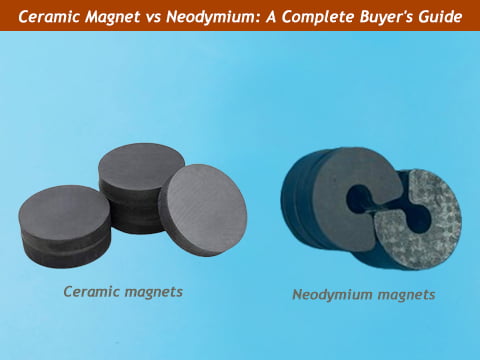
Ferrite magnets are the most commonly used and cost-effective option. They have lower magnetic strength compared to NdFeB and SmCo, but they are very stable and resistant to corrosion.
Typical automotive uses include:
· Basic sensors
· Small motors
· Speakers and electronic components
They are widely used when high strength is not required but reliability and cost control are important.
AlNiCo Magnets for Specialized Sensor Systems
AlNiCo magnets offer good temperature stability and are used in some specific automotive sensors and measurement devices. Although they are less common in modern EV systems, they are still valuable in applications where stable magnetic performance over temperature changes is needed.
Key Material Performance Requirements for Automotive Magnets
Automotive magnets are not selected only by material type, but by key magnetic and mechanical performance parameters. These parameters determine how the magnet behaves in real driving conditions such as high speed rotation, temperature changes, vibration, and long-term operation.
Understanding these core indicators helps engineers choose the right magnet for different automotive systems.
Magnetic Energy Product (BHmax) – Overall Strength of the Magnet
BHmax (Maximum Energy Product) is one of the most important indicators of a permanent magnet. It represents how much magnetic energy the material can store in a given volume.
In simple terms:
· Higher BHmax = stronger magnet in a smaller size
· Lower BHmax = larger magnet needed to achieve the same force
For example, high-performance
NdFeB magnets (e.g., N52 grade) can reach very high BHmax values compared to ferrite materials. This is why they are widely used in
EV traction motors, where compact size and high efficiency are critical.
Coercivity (Hc) – Resistance to Demagnetization
Coercivity (Hc) describes how well a magnet can resist external factors that try to weaken or reverse its magnetism.
In automotive environments, magnets are exposed to:
· High-speed rotation fields in motors
· Electrical interference
· Mechanical vibration
· Temperature fluctuations
A high coercivity (typically > 2000 kA/m for advanced NdFeB grades) ensures the magnet remains stable during operation. Without sufficient coercivity, magnets may suffer partial demagnetization, which reduces motor efficiency and long-term reliability.
Remanence (Br) – Remaining Magnetic Strength
Remanence (Br) refers to the magnetic strength a magnet retains after the external magnetizing field is removed.
It directly affects:
· Surface magnetic force
· Holding force in assemblies
· Sensor sensitivity and signal stability
For example, a magnet with higher Br will generate stronger attraction or signal output, which is important in applications such as
position sensors, locking systems, and compact actuators.
Temperature Stability – Performance Under Heat
Automotive systems often operate in high-temperature environments, especially near engines or power electronics. Magnet performance decreases as temperature increases, and in extreme cases, permanent damage (irreversible demagnetization) can occur.
Typical temperature behavior:
· Standard NdFeB magnets: ~80°C working limit
· High-temperature grades (SH/UH/EH): up to 150°C–200°C
· SmCo magnets: stable operation from
-40°C to 500°C, suitable for extreme thermal environments
To improve durability, surface treatments such as
nickel, epoxy, or zinc coatings are often used to prevent oxidation and maintain long-term performance.
Size, Shape, and Mechanical Design Flexibility
In automotive engineering, space is limited, so magnets must be designed for maximum efficiency within compact structures.
Modern manufacturing allows:
· Custom sizes and geometries
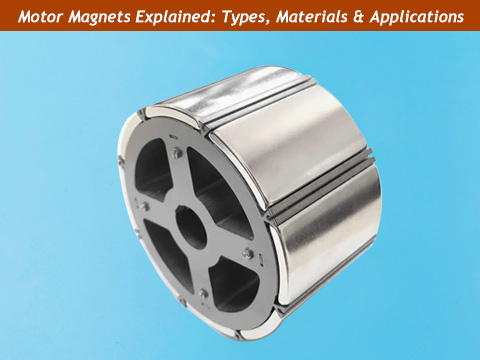
· Arc-shaped magnets for motor rotors
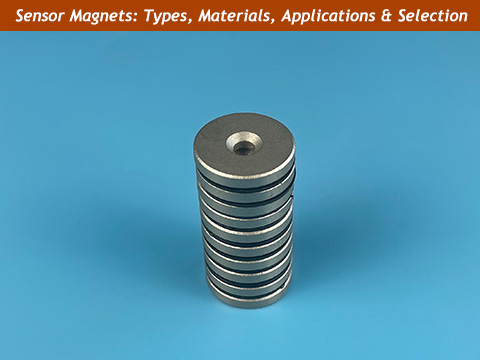
· Multi-pole magnetization for sensor systems
· Precision machining for tight tolerances
Mechanical strength is also important, especially under vibration. Proper packaging and protective coating help prevent chipping, cracking, or surface damage during transportation and installation.
Trends in Automotive Magnet Development
The automotive magnet industry is entering a new phase of transformation driven by electric vehicles, intelligent manufacturing, and global supply chain optimization. By 2026, the market is no longer competing only on cost or volume. Instead, it is shifting toward
high performance, customization, and sustainable production.
Shift Toward High-Performance Magnet Materials
As electric vehicles and advanced automotive systems continue to evolve, performance requirements for magnets are becoming more demanding. Manufacturers are increasingly focusing on:
· Higher magnetic energy density for compact EV motors
· Improved thermal stability for high-load environments
· Enhanced reliability under long-term vibration and stress conditions
This shift is accelerating the adoption of advanced NdFeB and SmCo solutions in critical automotive systems.
Increasing Demand for Customization and Precision Engineering
Modern automotive and sensor systems are becoming more compact and complex, which requires highly customized magnetic components rather than standard products.
Key industry trends include:
· Complex geometries such as arc, segment, and multi-pole magnet designs
· Tight dimensional control for precision assembly systems
· Application-specific magnetic performance tuning
Advanced manufacturing capabilities now play a critical role. For example, high-precision processing (up to ±0.01mm) and strong capability in irregular and custom-shaped magnets enable suppliers to support demanding applications such as precision sensors and automotive control systems.
Green Manufacturing and Sustainable Material Development
Sustainability is becoming a core requirement in the automotive supply chain. Driven by global “dual carbon” goals, magnet manufacturers are increasingly focusing on:
· Reduced rare earth material consumption
· More efficient production processes
· Improved material utilization and recycling
· Lower environmental impact across the full lifecycle
This shift is pushing the industry toward greener and more efficient permanent magnet solutions.
Conclusion
Automotive systems are becoming more compact, more electric, and more intelligent. In this shift, magnets are no longer just simple components—they are now key enablers of performance and efficiency.
What really matters today is not just choosing a magnet material, but matching the right magnetic solution to the right working condition. In many cases, small improvements in magnetic performance can directly translate into better motor efficiency, sensor accuracy, or system stability.
If you are developing EV or automotive systems, AEMagnets is a reliable
motor magnet manufacturer, providing stable quality and customized solutions for demanding engineering applications.