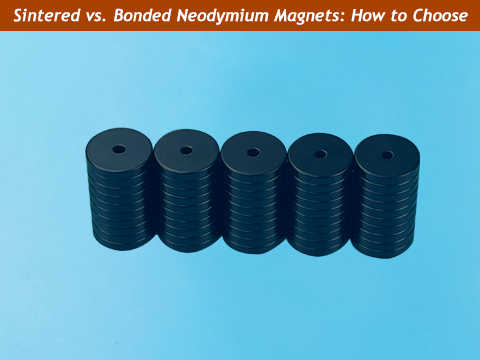
Sintered neodymium magnets are generally the better choice when you need high magnetic output in limited space. Bonded neodymium magnets are worth considering when a molded shape or integrated mounting feature can simplify assembly and still deliver the required magnetic field.
The choice starts with what the magnet needs to do in the finished product. A compact motor may need a strong field across its air gap, while a rotary encoder may need a ring with a precise pole pattern that produces a consistent signal at the sensor. Each application places different demands on the magnet.
This guide compares sintered and bonded neodymium magnets by magnetic performance, shape, magnetization, operating conditions, and production cost. You can use these criteria to narrow your options early in the design process, before finalizing a drawing or requesting a quote.
What Are Sintered and Bonded Neodymium Magnets?
Sintered neodymium magnets and bonded neodymium magnets both use neodymium-iron-boron (NdFeB) as their magnetic material. The main difference is how the powder is formed into a part. Sintering produces a dense magnet with higher magnetic output for a given size. Bonding combines the powder with a polymer binder, which gives manufacturers more flexibility to mold features into the finished part.
What Are Sintered Neodymium Magnets?
Manufacturers align fine NdFeB powder in a magnetic field, press it into shape, and heat it so the particles fuse together. This process, called
sintering, produces a dense magnet. The finished material is often ground or machined to meet dimensional requirements and coated to protect against corrosion.
Sintered NdFeB is a common starting point when a design needs
high magnetic output in limited space. In a compact motor, for example, sintered arc segments can help meet the required magnetic field without increasing the space allocated to the rotor magnets.
What Are Bonded Neodymium Magnets?
Manufacturers mix NdFeB powder with a polymer binder and form the mixture through
compression bonding or
injection molding. Compression bonding generally allows a higher proportion of magnetic powder, which favors stronger magnetic performance. Injection molding gives more freedom to form features such as thin walls, locating tabs, or a magnet molded directly around a hub.
Because the binder occupies part of the magnet’s volume, bonded magnets generally deliver less magnetic output than sintered magnets of the same size. They can be a practical choice when a molded shape simplifies assembly and still delivers the required field.
If your design calls for a thin-walled ring or a custom pole pattern, a
bonded magnet supplier can help you assess which molding process can meet your geometry and magnetic requirements.
Sintered vs. Bonded Neodymium Magnets at a Glance
Sintered neodymium magnets generally deliver more magnetic output for a given size. Bonded neodymium magnets offer more flexibility in part design, especially when injection molding can combine the magnet and mounting features in one component. The table below shows how those differences affect design and purchasing decisions.
|
Comparison factor |
Sintered neodymium magnets |
Bonded neodymium magnets |
|
Magnetic output |
Higher output for a given magnet volume. This is useful when space is limited and the application needs a strong field. |
Generally lower output for the same volume. Check whether the part can deliver the required field at the actual working distance. |
|
Shape and tolerances |
Common shapes include blocks, discs, rings, and arc segments. Grinding can achieve tight tolerances on critical dimensions. |
Compression bonding suits simpler shapes. Injection molding can produce more complex features, such as locating tabs or a ring molded directly onto a hub. |
|
Magnetization |
Available in several magnetization directions. For multipole designs, confirm the feasible pole pattern for the specific geometry. |
Often used for multipole rings in encoders and sensors. Confirm that the proposed pole pattern delivers the required signal at the sensor gap. |
|
Operating environment |
Temperature performance depends on the grade and magnet geometry. A protective coating is commonly used where moisture or corrosion is a concern. |
Temperature performance depends on both the magnetic powder and the binder. Check whether the part needs additional protection for the expected exposure. |
|
Production cost |
Include grinding, coating, and any assembly steps when comparing quotes. |
Include tooling costs. At higher volumes, molded features may reduce secondary operations or eliminate separate assembly parts. |
For an early design comparison, evaluate both options at the
same working gap and operating temperature. If both meet the magnetic target, compare the cost of the finished assembly at your expected production volume. A molded magnet that also serves as a mounting component can change the cost comparison, even when its unit price is higher.
How to Choose Between Sintered and Bonded Neodymium Magnets
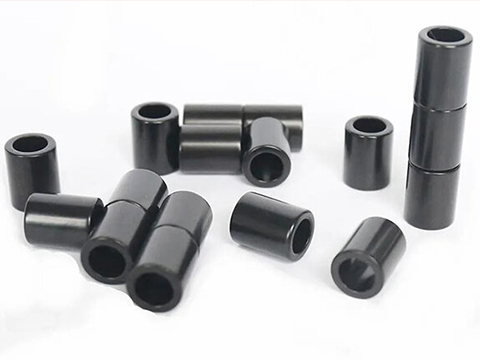
Start with what the magnet must do in the finished product. Even before you have a drawing, you can narrow the choice by defining the required magnetic performance, the space available, and the conditions the part will face in service.
1. Define the Required Magnetic Output
Identify the minimum performance your application needs. For a motor, this could be a torque target. For an encoder, it could be a minimum signal at the sensor. For a holding assembly, it could be the force needed to keep a part in place.
Compare options at the
largest expected working gap and check that they can meet the target at the operating temperature. If the design needs more magnetic output within a fixed space, start with a
sintered neodymium magnet. If a bonded magnet can meet the target in the available space, its shape and assembly options may make it the better fit.
2. Check the Shape and Pole Pattern Together
List the features your assembly needs, such as a locating tab, a thin-walled ring, or a magnet molded directly onto a hub. A simple block or arc segment may suit a sintered design. If a molded feature can replace a separate carrier or simplify alignment, consider an injection-molded bonded magnet.
For a multipole ring, consider the
pole count, pole spacing, and sensor gap together. A ring may fit the assembly and still produce too weak a signal at the sensor. Confirm that the proposed pole pattern can be manufactured and tested at the intended working distance.
3. Evaluate the Actual Operating Conditions
Check the normal and peak temperatures, how long the part stays hot, and whether it will encounter moisture, oils, or cleaning chemicals. For sintered magnets, review the grade’s resistance to demagnetization in the proposed geometry and check whether the coating suits the environment. For bonded magnets, check both the magnetic material and the binder, especially if the molded part also holds or locates another component.
If neither NdFeB option can meet the service requirements, a
permanent magnet manufacturer can help determine whether another material, such as samarium cobalt or ferrite, is worth evaluating.
4. Compare the Cost of the Finished Assembly
Once both options can meet the performance and service requirements, compare their costs at your expected order volume. Include tooling, grinding, coating, magnetization, and assembly labor in the comparison.
For example, a simple sintered magnet fitted into a separate hub may be economical for a prototype or a small run. For repeat production, a bonded magnet molded onto the hub could lower assembly costs by removing a separate fitting step. Compare the
total cost per finished assembly at your expected production volume.
Which Magnet Type Fits Your Application?
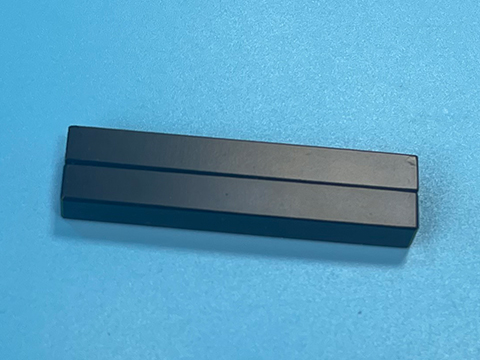
Sintered neodymium magnets are a good starting point when the design needs a strong magnetic field in a small space. Consider
bonded neodymium magnets when a molded shape, a custom pole pattern, or an integrated mounting feature can simplify the design.
|
Application |
Magnet to consider |
Why it fits |
|
Compact motors |
Sintered neodymium magnets |
A strong magnetic field helps the motor reach its torque target when there is little room for magnets. |
|
Industrial holding fixtures |
Sintered neodymium magnets |
A compact magnet can provide the force needed to hold a steel part in place. |
|
Magnetic couplings |
Sintered neodymium magnets |
Magnets can transfer torque across a gap without direct contact between the driving and driven parts. |
|
Compact speakers |
Sintered neodymium magnets |
A small magnet can provide a strong field in the gap where the voice coil moves. |
|
Rotary encoders |
Bonded neodymium ring magnets |
A sensor reads alternating north and south poles around the ring to track rotation. |
|
Position sensors |
Injection-molded bonded magnets |
A locating tab can be molded into the magnet to position it consistently relative to the sensor. |
|
Small pump rotors |
Injection-molded bonded magnets |
The magnet can be molded directly onto a rotor hub, reducing the number of parts to assemble. |
Use these examples as a starting point. The final choice depends on whether the magnet delivers the required force, torque, or sensor signal in the finished assembly.
Frequently Asked Questions
Can a bonded neodymium magnet replace a sintered magnet in an existing design?
Yes, if the bonded magnet meets the application’s performance requirements. Bonded magnets generally produce less magnetic output at the same size, so test the replacement in the actual assembly. Check the holding force, motor torque, or sensor signal at the working gap and operating temperature.
Can both types be made as multipole ring magnets?
Yes. The available pole patterns depend on the ring dimensions, the number of poles, and how the ring is magnetized. For an encoder, confirm that the sensor can detect each pole reliably at the largest expected gap.
Do bonded neodymium magnets need a protective coating?
It depends on the material and where the magnet will be used. If the part will be exposed to moisture, oils, or cleaning chemicals, confirm whether the binder provides adequate protection or whether a coating is needed.
Which type is better for prototypes or small orders?
For a simple shape, a stock or machined sintered magnet can be a practical starting point. If the design calls for a bonded magnet, check whether an existing mold can produce a suitable sample. If custom tooling is required, compare the upfront cost with the expected savings in production and assembly.
Conclusion
Choose
sintered neodymium magnets when you need a strong magnetic field in a small space. Consider
bonded neodymium magnets when a molded shape or an integrated mounting feature can simplify assembly and still deliver the required magnetic performance.
You can narrow the choice before you finalize a drawing. Start with what the magnet must deliver in the finished product, whether that’s a target torque, holding force, or sensor signal. If both options meet that target under your operating conditions, compare the cost of the finished assembly at your expected production volume.
As a
neodymium magnet manufacturer, AEMagnets can help you compare both options early in the design process. Share your performance target, available space, and operating conditions with our team to discuss which magnet fits your application.