Introduction
Magnets for wind turbines are an important part of modern wind power systems. Today, many wind turbine generators use
neodymium iron boron (NdFeB) magnets because they provide strong magnetic performance in a small and lightweight design.
These magnets are used in permanent magnet generators (PMGs) to create a stable magnetic field and help convert wind energy into electricity more efficiently. Compared with traditional generator designs, permanent magnet generators can reduce energy losses and improve overall efficiency.
However, wind turbine magnets need to work reliably for many years in outdoor environments. They must withstand temperature changes, moisture, vibration, and continuous operation. Therefore, choosing the right
magnet grade, temperature resistance, and protective coating is important for long-term performance.
In this article, we will explain what magnets are used in wind turbines, why NdFeB magnets are preferred, and how to choose the right magnets for wind power applications
.
Types of Magnets Used in Wind Turbines
Different types of permanent magnets can be used in wind turbine generators depending on the required performance, operating environment, and cost considerations. The three main magnet materials used in wind power applications are
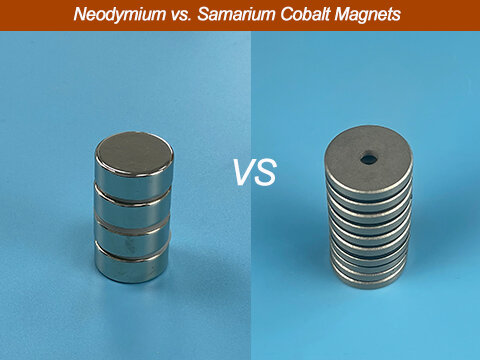
neodymium magnets (NdFeB), samarium cobalt magnets (SmCo), and ferrite magnets.
Neodymium Magnets (NdFeB): The Most Common Choice
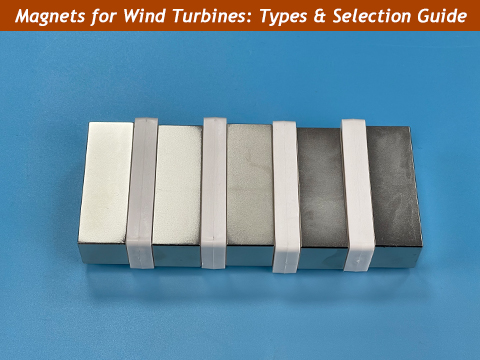
Neodymium magnets (NdFeB) are the most widely used magnets in modern wind turbine generators. Made from neodymium, iron, and boron, they offer the highest magnetic strength among commercial permanent magnets.
Their strong magnetic performance allows wind turbine manufacturers to design more efficient and compact generators, especially
direct-drive wind turbines that do not require a gearbox. This helps improve energy conversion efficiency and reduce maintenance requirements.
However, NdFeB magnets require proper grade selection and surface protection because they can be affected by high temperatures and corrosion.
Samarium Cobalt Magnets (SmCo): For Harsh Environments
Samarium cobalt (SmCo) magnets are less commonly used than NdFeB magnets but offer excellent performance in demanding conditions.
They have:
· Excellent high-temperature resistance
· Strong resistance to demagnetization
· Good corrosion resistance
These advantages make SmCo magnets suitable for applications where reliability under extreme conditions is more important than cost. For example, they may be considered for wind turbines operating in high-temperature environments or harsh offshore conditions.
Ferrite Magnets: A Cost-Effective Option
Ferrite magnets, also known as ceramic magnets, are a lower-cost alternative to rare earth magnets.
Compared with NdFeB and SmCo magnets, ferrite magnets have lower magnetic strength but offer:
· Lower material cost
· Good corrosion resistance
· Stable performance at moderate temperatures
Because of their lower magnetic output, ferrite magnets are generally more suitable for smaller wind turbines or cost-sensitive applications where maximum power density is not the primary requirement.
Choosing the Right Magnet for Wind Turbines
For most large-scale wind turbine generators,
NdFeB magnets remain the preferred choice due to their excellent balance of magnetic strength, efficiency, and size. SmCo and ferrite magnets can still be suitable alternatives when specific requirements, such as high-temperature resistance or cost control, become more important.
Why Are Neodymium Magnets Used in Wind Turbines?
Neodymium magnets (NdFeB) are widely used in wind turbine generators because they provide
strong magnetic performance in a small size. This allows manufacturers to build more efficient and compact generators for wind power systems.
The main advantages of NdFeB magnets include:
Strong Magnetic Performance
NdFeB magnets are the strongest commercially available permanent magnets. Their high magnetic strength allows generators to create a powerful magnetic field without using large amounts of material.
This helps wind turbine manufacturers design
smaller, lighter, and more efficient generators, especially for direct-drive wind turbines.
Better Resistance to Heat and Demagnetization
Wind turbines often operate in changing weather conditions and under different loads. During operation, the magnets may experience temperature increases and magnetic stress.
To maintain stable performance, wind turbine generators usually use
high-coercivity NdFeB magnets, such as H, SH, and UH grades. These magnets are designed to resist demagnetization and maintain their magnetic properties at higher temperatures.
Reliable Performance for Long-Term Operation
Wind turbines are expected to operate for 20 years or more, so the magnets must provide stable performance throughout their service life.
Because NdFeB magnets are sensitive to corrosion, protective coatings such as
nickel, epoxy, or other surface treatments are often applied to improve durability, especially in humid or offshore environments.
With the right magnet grade and coating, NdFeB magnets can provide the high performance and reliability required for modern wind turbine generators.
Challenges of Using NdFeB Magnets in Wind Turbines

Although
NdFeB magnets offer excellent magnetic performance, they also need to overcome several challenges in wind turbine applications. Since wind turbines are designed for long-term operation, magnet reliability is very important.
Temperature Resistance
High temperatures can reduce the magnetic performance of NdFeB magnets. During operation, wind turbine generators may experience heat from continuous running and changing environmental conditions.
To maintain stable performance, manufacturers often use
high-coercivity NdFeB grades, such as H, SH, and UH series, which provide better resistance to demagnetization.
Corrosion Protection
NdFeB magnets can be affected by moisture and humidity because their rare earth components are prone to oxidation.
This is especially important for offshore wind turbines, where exposure to saltwater and harsh weather can increase corrosion risks.
Protective coatings, such as
Ni-Cu-Ni and epoxy coatings, are commonly used to improve magnet durability.
Cost and Material Selection
NdFeB magnets contain rare earth materials, and the price of these materials can change over time. Some high-performance magnets may also use heavy rare earth elements to improve temperature resistance.
Therefore, manufacturers need to balance:
· Magnetic performance
· Operating conditions
· Cost requirements
· Long-term reliability
Manufacturing Quality
Wind turbine generators usually contain many individual magnets. Consistent magnet performance and accurate dimensions are important to ensure stable generator operation.
Reliable manufacturing processes and strict quality control help ensure that magnets can maintain performance throughout the turbine’s service life.
Factors to Consider When Choosing Wind Turbine Magnets
When selecting magnets for wind turbine generators, manufacturers need to consider more than just magnetic strength. The right magnet grade depends on the generator design, operating environment, and long-term performance requirements.
Operating Temperature
Different wind turbines operate under different temperature conditions. Higher operating temperatures can reduce the magnetic performance of NdFeB magnets over time.
For applications with higher temperature requirements, manufacturers may choose high-temperature NdFeB grades such as
H, SH, UH, or EH series to improve resistance to demagnetization.
Working Environment
Wind turbines installed in coastal or offshore areas face higher risks from humidity and salt exposure. In these environments, corrosion-resistant coatings are especially important to protect the magnets and maintain long-term performance.
Common coating options include:
· Ni-Cu-Ni coating
· Epoxy coating
· Zinc coating
Magnet Grade Selection
Choosing the correct magnet grade requires balancing different properties:
· Higher magnetic strength for better generator performance
· Higher coercivity for improved temperature stability
· Suitable coating for environmental protection
The best choice depends on the specific requirements of the wind turbine system rather than simply choosing the highest grade available.
Manufacturing Quality and Consistency
Large wind turbine generators often use many individual magnets. Consistent magnet dimensions and magnetic properties are important to ensure stable generator performance.
A reliable magnet supplier should provide:
· Stable production processes
· Strict quality control
· Consistent magnetic performance
· Custom magnet solutions based on generator requirements
Choosing the Right Wind Turbine Magnet Supplier
Choosing a reliable
magnet supplier is important for the long-term performance of wind turbine generators.
A good supplier should provide:
·
Suitable magnet solutions based on your application needs
·
Consistent product quality for reliable operation
·
Custom manufacturing support for different designs and requirements
Working with an experienced magnet manufacturer can help ensure better performance and reduce risks during production.
Conclusion
NdFeB magnets are widely used in wind turbines because they provide strong magnetic performance, compact size, and high efficiency. However, the right magnet grade, coating, and supplier are important for achieving long-term reliability.
AEMagnets provides customized
NdFeB magnet solutions with support in magnet selection, design, and manufacturing.
Contact us to discuss your wind turbine magnet requirements and find a suitable solution for your project.